Green mold can show up quickly in areas that stay damp, and it often spreads before you fully notice it. You might see it on a bathroom wall, near a window, or around a leaking pipe. Once it appears, it rarely stays confined to a single small spot.
Many people wonder if green mold is dangerous once they notice it indoors. The risk can vary depending on the amount of mold present and how long it has been there. Taking it seriously early helps prevent it from becoming a bigger issue.
This article explains what green mold is, why it forms, and how to get rid of it safely. It also covers when to call for help and how to prevent it from coming back. With the right approach, you can address the problem before it spreads further.
What Is Green Mold and Where Does It Grow?
Green mold is a general term used for several mold types that share a green appearance. It is not limited to a single species and can develop in many indoor environments. Like other molds, it grows when moisture and organic materials are present.
These molds spread through airborne spores that settle on damp surfaces. Once they land, they begin to grow and can expand across nearby materials. If moisture continues, the growth becomes more widespread.
Green mold is often found in areas where moisture collects. Bathrooms, kitchens, basements, and spaces near leaks are common locations. It can grow on drywall, wood, carpet, and fabrics.
Because it does not always grow in open areas, it can stay hidden for some time. This makes it harder to detect early and allows it to spread unnoticed.
Is Green Mold Dangerous to Your Health?
Green mold can be harmful, especially with continued exposure. The effects depend on how much mold is present and how long someone is exposed. Some people notice symptoms quickly. Others may take longer to react.
Mold spores can irritate the respiratory system. Common symptoms include coughing, sneezing, and throat discomfort. Some individuals may also experience headaches or fatigue.
Skin and eye irritation can also develop. Direct contact may cause redness or itching, and the eyes may become watery or uncomfortable. These symptoms can increase if exposure continues.
Certain groups are more sensitive to mold. Children, older adults, and people with asthma or allergies may react more strongly. In such cases, early removal is especially important.
What Causes Green Mold to Grow?
Green mold growth is directly linked to moisture. Without it, mold cannot survive or spread. Once moisture is present, growth can begin quickly.
Leaks are a common cause. Plumbing issues, roof damage, and appliance leaks can introduce moisture into hidden areas. Even small leaks can create the conditions mold needs.
Humidity also contributes to mold growth. High indoor moisture levels make it easier for mold to develop, especially in areas with poor airflow. Bathrooms and basements are often affected.
Water can move through materials and settle behind surfaces. This allows mold to grow in hidden spaces. As a result, the issue may develop further before it becomes visible.
Signs of Green Mold to Watch For
Green mold often shows up in ways that are easy to miss at first. Some signs are visible on the surface, while others develop before mold appears at all. Paying attention to these changes can help you act sooner.
Discoloration is often one of the first signs. Green or dark patches may form on walls, ceilings, or other surfaces. These areas may continue to expand over time.
A musty or damp odor is another common indicator, and is one of the earliest warning signs. Many times, this smell appears before mold is visible and often points to hidden moisture.
You may also notice texture changes directly on affected surfaces. Green mold can appear fuzzy, slimy, or powdery depending on the material and moisture level.
How to Get Rid of Green Mold
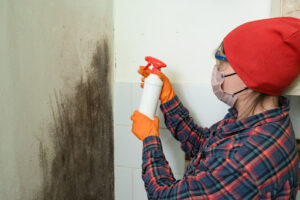
Knowing how to safely get rid of green mold before you start helps you avoid spreading spores to unaffected areas. Small areas can sometimes be handled with care, but larger problems require a more thorough approach.
Before cleaning, take basic safety steps. Wear gloves and a mask, and keep the area well ventilated. This helps reduce exposure to mold spores.
For non-porous surfaces, simple cleaning methods can remove visible mold. Soap and water or mild solutions can work for small patches. After cleaning, the area should be completely dry.
Mold on porous materials is harder to remove. It can grow beneath the surface, which makes complete removal difficult. In these cases, cleaning alone may not be enough.
When Mold Removal Requires Professional Help
Some mold problems go beyond basic cleaning. Large areas or recurring growth often point to deeper moisture issues. Professional help can provide a more complete solution.
Hidden mold is a common concern. It can grow behind walls or under flooring without being visible. A musty smell or repeated growth may indicate this type of issue. In those situations, a professional inspection can locate moisture that isn’t visible from the surface.
Professional remediation involves more than surface cleaning. Technicians assess the area, locate moisture sources, and remove mold safely. Specialized equipment helps contain and clean affected spaces.
Our mold removal and remediation process covers everything from the initial inspection through final cleanup, so you know exactly what to expect at each step.
How to Prevent Green Mold from Returning
Preventing mold starts with moisture control. Keeping surfaces dry reduces the chance of future growth, and consistent maintenance helps avoid recurring issues.
Fix leaks as soon as they appear. Even small problems can lead to mold if they are not addressed. Quick action helps prevent moisture buildup.
Improving airflow also helps. Ventilation removes excess moisture from indoor spaces. Bathrooms and kitchens benefit from proper air movement.
Regular checks make a difference. Look for damp areas, odors, or discoloration. Catching these early helps prevent mold from returning.
Why Acting Early Makes a Difference
Mold problems tend to grow over time. What starts small can spread to a larger area if left untreated. Acting early helps limit the damage.
Moisture can travel through materials and affect nearby spaces. Walls, flooring, and structural materials can all carry water further than the source. This allows mold to spread well beyond the area where it first appeared. Early action helps contain the issue before it reaches those surrounding spaces.
For larger concerns, our team offers a full range of water damage repair and cleanup services that are tailored to what your property needs.
Get Reliable Mold Removal with 1-800 WATER DAMAGE
Mold problems often go deeper than what you can see on the surface. Working with a professional team helps address both the visible growth and the moisture behind it, giving you a clearer path toward a complete solution.
When you reach out to us, we start with a detailed inspection. Our technicians identify affected areas, locate hidden moisture, and determine how far the mold has spread. From there, we build a targeted plan focused on resolving the issue at its source.
We use specialized equipment to contain and remove mold safely. Air filtration systems help improve indoor conditions throughout the process, and thorough drying methods reduce the chance of future growth. Each step is structured to restore your space in a reliable, methodical way.
If you’re noticing signs of mold, acting early helps limit further damage. Request service today or enter your zip code below to find a 1-800 WATER DAMAGE location near you.