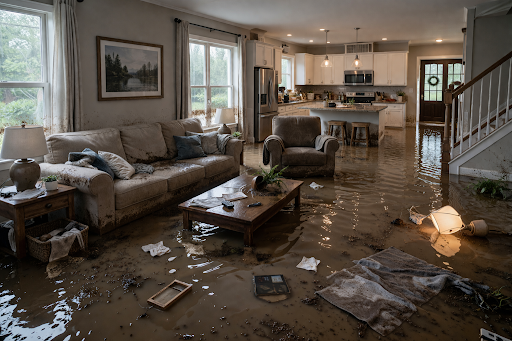
 The hurricane came and went, the standing water dried, but what was left behind was far more dangerous. A fine, invisible film of salt was etched into the floorboards, spread across copper wires, and embedded deep into subfloor materials. And from that moment on, your house began to corrode from within.
At 1-800 Water Damage of Naples, FL, we’ve seen this story unfold too many times. The salt hides quietly until it causes outlets to fail, floors to pop, and structural joints to rust through.
Freshwater Isn’t Innocent—But It’s Honest About Its Damage
Burst pipes don’t carry salt, but they don’t come without risk. A clean water leak can saturate an entire room in minutes and turn into black mold within days. Drywall collapses, swollen baseboards, and warped hardwood happen fast. But at least you can see it coming. Freshwater doesn’t disguise its destruction. It rushes in, makes a mess, and demands a response—immediately.
Saltwater Leaves Corrosion That Grows Stronger Over Time
Salt deposits don’t evaporate. They form crystalized layers inside materials and silently attract moisture back into the home. That means even after the water is gone, your home is still absorbing and reacting to humidity. Every inch of wiring, metal, and porous surface becomes a target. We’ve opened up walls that seemed fine—only to find rusted outlet boxes and nails crumbling to the touch. The damage was chemical. And it had never stopped working.
Freshwater Can Collapse Your Ceiling in Hours
A pipe burst above a ceiling can bring down insulation, drywall, and fixtures in a matter of hours. The damage is fast and often violent. But if caught and dried quickly, it’s repairable. It won’t come back to haunt you—unless you wait. Time is the true enemy of freshwater damage. The longer you hesitate, the closer you get to full mold remediation and structural replacement.
You Can’t Trust “Dry” If You Haven’t Tested It
Here’s a test anyone in Naples can do right now: run your fingers across a previously wet tile or concrete surface. If you feel grit or dust—even after cleaning—it may be salt. That’s the hidden culprit that leads to rot, mold, and wiring failure weeks after a storm. Just because something looks dry doesn’t mean it’s safe. And in Florida’s climate, the moisture doesn’t have to come from water—it can be pulled from the air by embedded salts.
Insurance Companies Treat These Events Differently—And You Should Too
Saltwater intrusion often falls under flood insurance. Burst pipes fall under homeowners coverage. This single difference can determine how much you’re paid, how quickly you’re covered, and what kinds of repairs are reimbursed. If the wrong source is listed on your claim, you could be denied coverage altogether. That’s why our team performs immediate testing and documentation to prove—not guess—what kind of water caused the damage.
The True Danger Isn’t the Water You See—It’s What You Missed
The biggest failure point we see is overconfidence. Homeowners mop up what they can see, call it “dry,” and move on. But behind the scenes, mold spreads, corrosion continues, and adhesives weaken. The home you thought you saved begins to unravel. By the time you call a professional, the damage has doubled—and so has the cost.
We Know the Difference—and We Treat the Source
At 1-800 Water Damage of Naples, FL, we don’t use generic cleanup plans. We use water testing, thermal mapping, moisture readings, and chemical neutralization to treat exactly what your home was exposed to. Salt needs a different protocol than clean water. And if you treat them the same, you’re not solving the problem—you’re setting it up to return. We don’t just clean, we stabilize. We don’t just remove water, we remove the cause of future failure.
Call 1-800 Water Damage of Naples, FL at (239) 206-3131 today. Saltwater damage is chemical warfare against your home—and freshwater damage is a ticking mold clock. If you don’t know which one hit you, we do. Call now before what’s hidden takes your structure down.