A musty smell from an air conditioner may be a sign of mold growth where moisture, dust, and limited airflow meet. AC units collect condensation as they cool warm air, and when that moisture does not drain or dry completely, mold can form on filters, vents, coils, drain pans, or inside a window unit.
Cleaning mold from an AC unit takes care because water, harsh chemicals, and rough scrubbing can damage electrical parts. A safe approach starts with turning the system off, cleaning only reachable surfaces, drying the unit fully, and knowing when to call a professional.
Our guide explains how to clean mold from air conditioner unit surfaces, what causes mold, what to do in the event of black mold, and how to help prevent it from returning.
Why Does Mold Grow in an Air Conditioner?
Mold grows in an air conditioner when moisture and dust collect inside the unit. AC units remove humidity from warm air, so condensation is normal. That water should drain away, but mold can begin to form when moisture sits too long.
A dirty filter can make the problem worse because it limits airflow and allows more dust to collect inside the unit. Drainage problems can also lead to mold if the drain pan or drain area is dirty, clogged, or holding water.
Window air conditioners can develop mold when exposed to humidity, rain, dirt, or damp storage. Common warning signs include a musty smell when the AC turns on and dark spots near the filter, front grille, drain pan, or inside a window unit.
How Do You Safely Clean Mold From an Air Conditioner Unit?
To clean small areas of mold from an air conditioner, shut off the power, protect yourself, remove the filter, clean reachable hard surfaces, and dry the unit completely. Do not take the unit apart beyond what the owner’s manual allows.
Turn Off the Unit and Protect Yourself
For a window air conditioner, unplug it from the outlet. For a larger AC system, turn it off at the thermostat before cleaning around the unit.
Wear gloves, eye protection, and a mask before touching moldy parts. Cleaning can disturb mold and release particles into the air, so keep children and pets away until you are finished.
Remove the Filter
Check the filter before cleaning the rest of the unit. If it is disposable and has visible mold, place it in a sealed bag and throw it away. Do not wash a disposable filter and put it back.
If the filter is washable, clean it as instructed. Rinse it well and let it dry completely before reinstalling it. A damp filter can lead to more mold growth.
Clean Reachable Hard Surfaces
Use a damp cloth, mild detergent, and water to clean hard surfaces you can reach safely. This may include the front cover, grille, vent cover, drain pan, and accessible areas.
Do not soak the unit or spray cleaning agents into electrical parts, motors, controls, or tight internal spaces. If the manufacturer recommends an AC-safe cleaner, follow that guidance. Never mix bleach with ammonia, vinegar, or other cleaners.
Dry Everything Before Turning the AC Back On
After cleaning, wipe the surfaces with a dry cloth and let them air dry. Do not restart the air conditioner until the filter, cover, and cleaned surfaces are fully dry.
Mold often returns when moisture is left behind, so drying matters.
How Do You Clean a Window Air Conditioner With Mold?
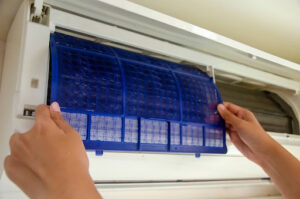
To clean a window air conditioner with mold, unplug it, remove the front cover and filter, clean reachable surfaces, clear the drain area, and let the unit dry.
Remove the front cover according to the owner’s manual. Wash the cover with warm water and mild detergent, then set it aside to dry. Replace a moldy disposable filter, or clean a washable filter if the manufacturer allows it.
Look inside the unit for dust, dirt, standing water, or visible mold. Use a damp cloth or soft brush on surfaces you can reach without forcing parts open. Be careful around coils and fins because they can bend easily.
Check the drain area before putting the unit back in place. Dirt, leaves, and debris can keep water from draining properly. Once all cleaned parts are dry, reinstall the filter and cover. If the odor returns quickly, the mold may be deeper inside the unit.
What Should You Do if the Mold Looks Black?
If the mold looks black, treat it carefully and avoid disturbing it more than needed. Mold color does not prove what type of mold it is. Many types of mold can look black, and testing is the only way to identify the exact type.
Small dark spots on a removable hard surface can often be cleaned the same way as other mold. Turn the unit off, wear protective gear, use a damp cleaning method, and dry the surface fully.
Do not scrape, dry-brush, or aggressively scrub black mold. That can send particles into the air. If you are unsure how to clean black mold from air conditioner surfaces safely, or the growth appears larger than a small surface issue, 1-800 WATER DAMAGE provides professional mold removal and remediation services for air conditioner mold concerns.
How Can You Stop Mold From Returning?
To prevent mold from returning, keep the AC clean, control moisture, and make sure water drains properly. Cleaning visible mold is only one part of the solution.
Change or Clean the Filter Regularly
A clean filter helps air move through the unit and reduces dust buildup. Check the filter more often during heavy cooling seasons. Replace disposable filters when they are dirty, and let washable filters dry fully before putting them back.
Keep Moisture and Drainage Under Control
The drain pan and drain line help remove condensation from the unit. Check for standing water, slow drainage, dripping, or damp smells near the AC. High indoor humidity can also increase the likelihood of mold growth, so use fans or a dehumidifier in damp areas.
Store Window Units Dry
Before storing a window air conditioner, clean the filter, wipe away dirt, and let the unit dry. If the unit has a fan-only mode, running it briefly can help dry the inside. Store the unit in a dry place instead of sealing a damp unit in plastic.
When Should You Call a Professional for AC Mold?
Call a professional if the mold keeps returning, covers more than a small area, appears inside parts you cannot reach safely, or follows a leak or water damage event. You should also get help if the musty smell spreads beyond the unit or does not go away after replacing the filter and cleaning reachable surfaces.
A professional can inspect the affected area, find the moisture source, clean contaminated materials, and help reduce the chance of mold returning. If the mold problem started after a leak, flooding, or another moisture issue, 1-800 WATER DAMAGE can also help with water damage and mold repair services for affected areas of your property.
Call 1-800 WATER DAMAGE for Mold Removal Help
A small amount of surface mold on a removable AC component may be handled with careful cleaning. Recurring mold, black mold concerns, strong odors, or mold associated with water damage should be handled with more care.
1-800 WATER DAMAGE helps homeowners and businesses address mold problems with professional cleanup and restoration support. If you need help with AC mold or a related moisture issue, contact 1-800 WATER DAMAGE for professional mold cleanup and repair help. You can also enter your ZIP code to find a local 1-800 WATER DAMAGE team near you.