How to Prevent Electrical Fires
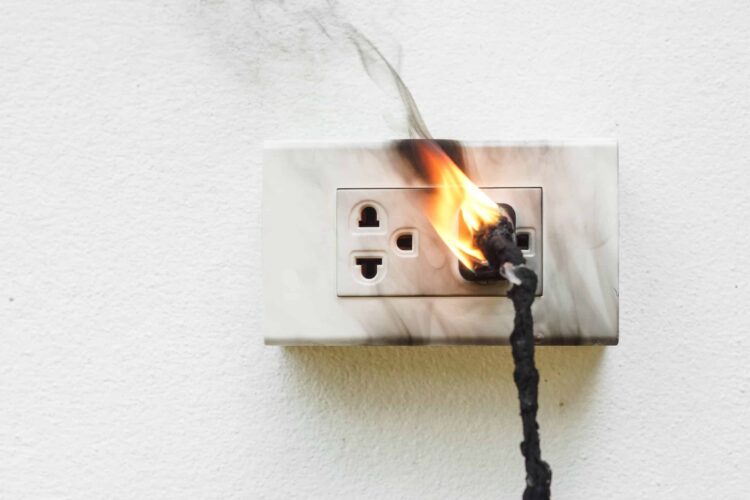
The U.S. Fire Administration (FEMA) says that an estimated 24,200 residential buildings reported electrical fires to fire departments, causing $1.2 billion in property loss in 2021. Electrical fires can start suddenly from appliances, electrical work, and electrical products like power strips or extension cords, read more for tips on how to prevent an electrical fire in your home.
Home Appliances- Big and Small
Appliances make our lives easier, but are a potential fire hazard if not used properly or allowed to run while damaged. If an appliance such as a toaster, microwave, oven, air fryer, or even a lamp has a damaged cord, replace it! A damaged cord (cracked, loose, wires out of the protective silicone covering, etc.) greatly increases the chances of a fire. Appliances should always be plugged directly into the outlet, never, ever use an extension cord to power appliances.
Lamps can get hot, make sure there is nothing touching the light bulb, keep flammable materials away, and always make sure the lightbulbs match the wattage of the lamp. For the sake of your electric bill and the fire safety of your home, ensure chargers and smaller appliances are unplugged when not being used, especially if you intend to leave your home.
Outlets- Stay Connected, Stay Safe
Outlets keep us ‘plugged’ into the world, but should not be ignored for fire safety. If your home has children or pets, tamper-resistant outlets or outlet covers are recommended to prevent any mishaps from curious minds.
Remember not to overload your outlets. For example, if your outlet has 2 sockets, it should not have 6 plugs attached. Overloading puts unnecessary stress on the outlet and provides several points to generate heat and sparks.
If your cord has 3 prongs, attach it to a grounded outlet (3 holes) and never force a 3 pronged cord into an ungrounded (2 hole) outlet. Should you find that the plug is unsecure, falling out/ wiggly, it’s time to replace the outlet; plugs should fit snugly and be fully inserted to prevent sparks and overheating.
Bringing Outlets to Electronics- Extension Cords and Power Strips
Sometimes, outlets do not perfectly line up with the length of cords or how you’ve arranged your home, so an extension cord is used to more elegantly and conveniently power electronics. Extension cords and power strips products are useful tools, but pose a large risk if not used correctly.
Never overload your extension cord or power strip, keep the amount of plugs equal to the number of sockets. When a power strip is used, always check that it has an internal overload protection before purchase and use; internal overload protection will shut down the power strip if it gets too hot or the current is too great to prevent a fire.
When deciding the placement of extension cords or power strips, make sure they are out of reach of pets and children to prevent fire and for their safety. Do not place extension cords or power strips under rugs, carpets, or in too small spaces where the cord can become damaged, pinched, or misshapen.
1800 Water Damage Electrical Fire Restoration
When it comes to electrical fire damage restoration, safety is always a crucial concern. Not only is it important to ensure that power sources are shut off, but it’s also critical to investigate potential issues to reduce the risk of a similar incident. At 1-800 WATER DAMAGE, we begin with a comprehensive assessment to identify potential hazards, including electrical issues. After that, we’ll survey the scope of damage to your property and formulate a detailed treatment plan.
With 1-800 WATER DAMAGE, you never have to worry about hidden costs or similarly unpleasant surprises. We offer upfront, transparent pricing with all our services, including electrical fire damage restoration.
We help you understand what is happening with your electrical fire restoration and what steps make sense for your situation. Enter your zipcode to find a 1-800 WATER DAMAGE location near you and take the next step toward repairing fire-related damage in your home.