Water Damage on Hardwood Floors: Signs and Solutions
Hardwood floors can add warmth and character to any space, but they’re also very vulnerable to damage.
Because wood naturally reacts to moisture, even a small amount of water can cause noticeable issues over time. A sudden plumbing problem, a slow leak near a wall, or ongoing humidity can all affect how hardwood floors look and perform if moisture is allowed to linger.
Read below to learn how to recognize common signs of water damage and outline practical repair approaches that can help address the issue before full replacement becomes the only option.
How Does Water Affect Hardwood Floors?
Hardwood flooring reacts to moisture because wood is a natural, porous material.
When water comes into contact with the surface, it can soak into the boards or seep between them through seams and joints. As the wood absorbs moisture, it begins to expand. This expansion does not always occur evenly, which causes boards to shift or change shape.
Water does not always stay on the surface. It can move beneath the hardwood and collect between the boards and the subfloor. Once moisture becomes trapped below, it is much harder to dry naturally. This trapped moisture puts pressure on the flooring from underneath, often leading to lifting, warping, or separation.
Humidity can also play a role over time. Consistently high moisture levels in the air can slowly affect hardwood floors, even without a visible leak. Changes may happen gradually, making them easy to overlook until the damage becomes more noticeable.
Common Signs of Water Damage on Hardwood Floors
Water damage often reveals itself through physical changes in the floor.
These signs may start small and worsen if moisture is not addressed. Recognizing them early can help limit how much of the floor is affected. If you notice signs that point to storm-related damage, professional help becomes even more important. Below are some of the most common indicators.
Cupping and Crowning
Cupping occurs when the edges of hardwood boards rise higher than the center, creating a shallow curve across the width of the board. This usually happens when moisture is absorbed from below the floor.
Crowning is the opposite effect, where the center of the board rises above the edges, often due to surface moisture or improper drying after water exposure. Both conditions signal moisture imbalance within the wood and should be evaluated before they progress further.
Buckling and Warping
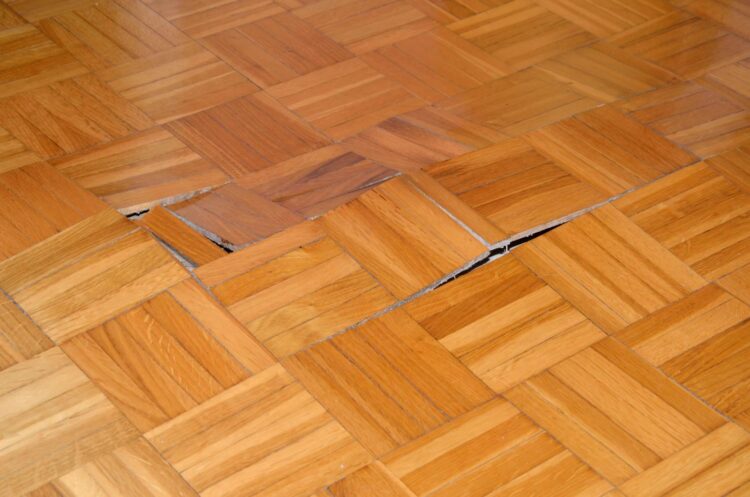
Buckling is one of the most noticeable and concerning signs of water damage. Boards may lift completely away from the subfloor, forming peaks or waves across the floor.
Warping can make the surface uneven and difficult to walk on. This type of damage is often linked to prolonged moisture exposure or water trapped beneath the hardwood and usually requires professional attention.
Discoloration and Staining
Water can alter the appearance of hardwood floors by affecting both the wood and the finish. Dark stains, gray patches, or cloudy areas may appear where moisture has settled. These changes can spread outward from the source if moisture is not addressed. Discoloration often indicates that water has been present long enough to impact the material beneath the surface.
Soft or Spongy Areas
When hardwood absorbs too much moisture, the wood fibers can weaken. This may cause sections of the floor to feel soft, spongy, or unstable when walked on. These areas suggest deeper moisture involvement and should be taken seriously, as they may point to damage beyond the surface boards.
Musty Odors Near the Floor
Persistent odors near hardwood floors often signal moisture trapped beneath the surface. Visible damage may seem minimal, but odor can indicate water buildup below the boards or in the subfloor. This is a common sign of hidden water damage that should be professionally assessed.
What To Do When You Notice Water Damage
Once signs of water damage appear, your response can make all the difference. Taking the right steps early can help prevent moisture from spreading and reduce the extent of repairs needed.
For a complete breakdown of immediate actions, our 24/7 water damage emergency guide offers step-by-step guidance.
Act Quickly To Limit Further Damage
Moisture spreads over time, especially beneath hardwood floors. Acting promptly can reduce how far water travels and how much of the floor becomes affected. Delays often lead to more extensive damage and longer repair timelines.
Identify and Stop the Water Source
Repair work cannot succeed unless the source of water is addressed first. This may involve fixing a plumbing issue, addressing appliance leaks, or resolving water intrusion from outside the home. Stopping the source helps prevent repeated exposure and supports effective repairs.
Avoid DIY Fixes That Can Make Things Worse
Surface drying, sanding, or refinishing too soon can trap moisture inside the wood. These steps may make the floor look better temporarily, but can cause larger problems later. A professional assessment helps determine when drying is complete and what repairs are appropriate.
Professional Solutions for Water-Damaged Hardwood Floors
Repairing water-damaged hardwood floors requires a structured approach. Professionals focus on understanding moisture levels, drying the area properly, and addressing damage without unnecessary removal. Here is how the process typically unfolds.
Moisture Assessment and Inspection
Professionals use specialized tools to measure moisture levels in the hardwood and subfloor. This assessment shows how far water has traveled and which areas are affected. Accurate readings guide every step that follows and help avoid incomplete repairs.
Controlled Drying and Dehumidification
Drying hardwood floors is a careful process. Professional equipment removes moisture gradually and evenly, allowing the wood to release moisture without added stress. This step helps stabilize the floor before any repair or replacement begins.
Repair or Replacement of Affected Boards
Some hardwood boards can recover once moisture levels return to normal. Others may be too damaged and need replacement. The goal is to repair only what is necessary, preserving as much of the existing floor as possible.
Addressing Subfloor and Structural Concerns
Water damage often extends beyond the hardwood itself. Moisture in the subfloor or surrounding materials must be addressed to support long-term floor performance. Overlooking these areas can lead to recurring issues.
Important: Are you a business owner dealing with water-damaged hardwood? You may benefit from learning more about commercial water damage repair services.
Preventing Future Water Damage to Hardwood Floors
Preventing future water damage takes awareness and maintenance. Checking appliances, plumbing connections, and visible pipes helps catch leaks early. Managing indoor humidity through ventilation and climate control also supports hardwood floor stability.
Prompt cleanup of spills and periodic inspections can reduce the risk of hidden moisture problems. These habits help protect hardwood floors and extend their lifespan.
Get Peace of Mind With 1-800 WATER DAMAGE
We understand how stressful it can be to see water damage affecting your hardwood floors. At 1-800 WATER DAMAGE, we focus on careful assessment, clear communication, and coordinated repair services. Our teams work to identify the source of moisture, evaluate the extent of damage, and guide you through the repair process with professionalism and care.
We help you understand what is happening with your floors and what steps make sense for your situation. Enter your zipcode to find a 1-800 WATER DAMAGE location near you and take the next step toward repairing water-related damage in your home.
Frequently Asked Questions
Can water-damaged hardwood floors be saved, or do they always need to be replaced?
Many water-damaged hardwood floors can be repaired rather than fully replaced. The outcome depends on how long the moisture was present, how deeply it penetrated, and whether the subfloor was also affected. A professional moisture assessment helps determine which boards can be dried and restored and which ones need replacement.
How long does it take for water to damage hardwood floors?
Water can begin affecting hardwood floors within hours of exposure.
Visible signs like cupping or discoloration may appear within a day or two, but deeper issues such as buckling or subfloor damage can develop over several days to weeks if moisture is not addressed. The speed of damage depends on the amount of water, the type of wood, and environmental conditions like humidity.
Why do my hardwood floors smell musty even if they look fine?
A musty odor often indicates moisture trapped beneath the surface of the floor or within the subfloor. Wood and subfloor materials can hold moisture even when the visible surface appears dry. This hidden moisture can lead to ongoing problems if not professionally evaluated and dried.
Is it okay to use a regular fan or space heater to dry water-damaged hardwood floors?
Using household fans or space heaters is not recommended for drying water-damaged hardwood. Uncontrolled heat or airflow can cause the wood to dry unevenly, leading to cracking, further warping, or gaps between boards. Professional drying equipment removes moisture gradually and evenly to protect the integrity of the floor.
How can I tell if water damage has reached my subfloor?
Signs that water may have reached your subfloor include soft or spongy areas when walking, persistent musty odors, or hardwood boards that have buckled or lifted. A professional inspection using moisture meters can confirm whether the subfloor has been affected and help guide the appropriate repair approach.
Does homeowner’s insurance typically cover water damage to hardwood floors?
Coverage depends on the source of the water and your specific policy. Sudden and accidental events, such as a burst pipe, are often covered, but damage from gradual leaks or lack of maintenance may not be. We recommend reviewing your policy and speaking with your insurance provider to understand your coverage.